
Overview
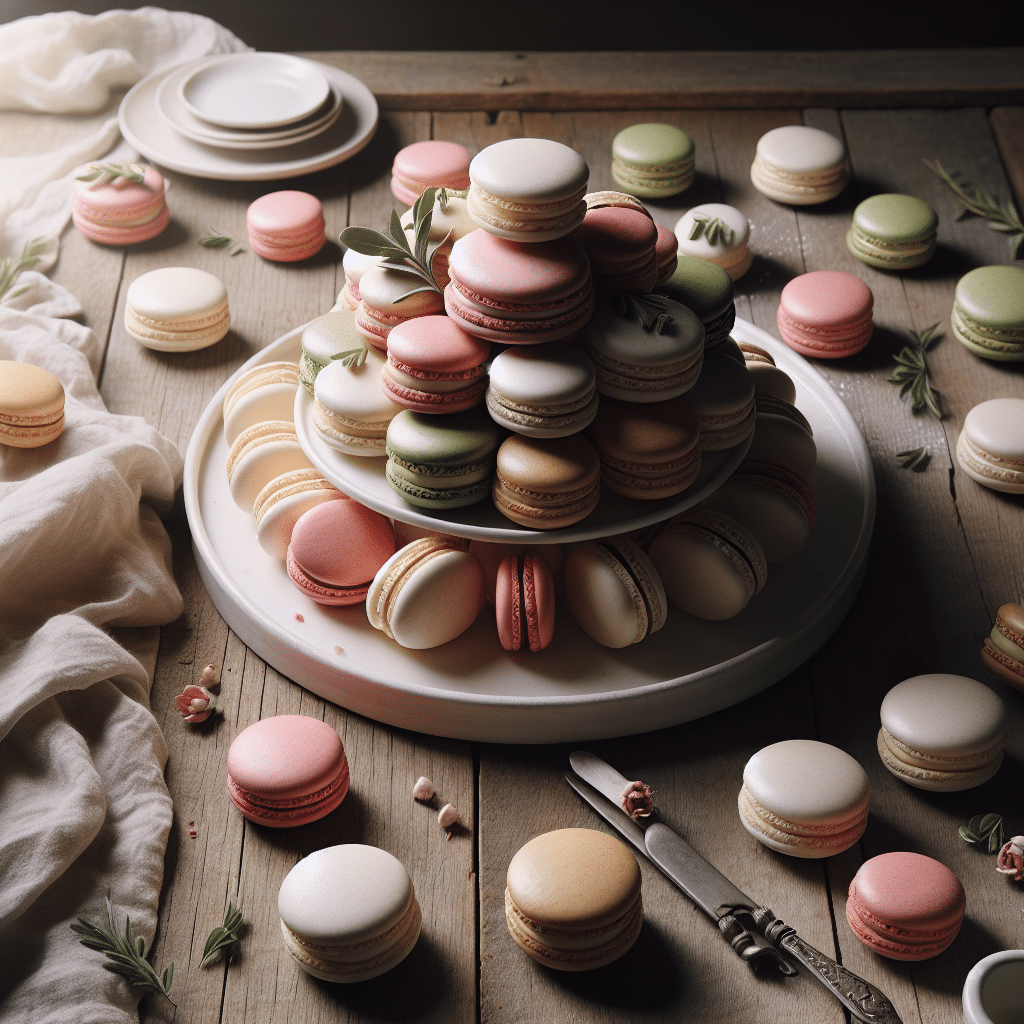
French macarons are delicate and colorful meringue-based cookies filled with a variety of luscious creams and ganaches. They are perfect for anyone looking to impress guests, celebrate special occasions, or simply indulge in a pastry treat. The estimated prep time is about 1 hour, with an additional 30 minutes for baking; however, the overall process can take around 4 hours, including cooling and assembling. The difficulty level can be classified as intermediate due to the precision required in baking.
Originating from France, particularly Paris, macarons boast a unique flavor profile that includes lightness from the meringue and richness from fillings such as buttercream, ganache, or jam. They are ideal for festive gatherings, bridal showers, and afternoon tea with friends.
Ingredients
– 115g (4 oz) almond flour
– 200g (7 oz) powdered sugar
– 3 large egg whites (about 90g)
– 30g (1 oz) granulated sugar
– Food coloring (optional)
– 200g (7 oz) butter (for filling)
– 250g (8.8 oz) confectioners’ sugar (for filling)
– 1 teaspoon vanilla extract (for filling)
– Pinch of salt
Traditional French ingredients include almond flour, which adds texture and flavor to the macarons, and high-quality unsalted butter for the filling.
Step-by-Step Instructions
1. **Prepare the Baking Sheets:** Line two baking sheets with parchment paper, ensuring the surface is smooth. If you have a template, place it under the parchment paper.
2. **Sift the Dry Ingredients:** Combine almond flour and powdered sugar in a bowl. Sift the mixture into another bowl to ensure there are no lumps, which could affect the macarons’ texture.
3. **Whisk the Egg Whites:** In a clean, grease-free bowl, begin whisking the egg whites at medium speed until they turn frothy. Gradually add the granulated sugar and increase the mixer speed to medium-high until stiff peaks form. This should take about 5-7 minutes. The meringue will be glossy and maintain a firm peak when ready.
4. **Incorporate the Dry Ingredients:** Gently fold the sifted almond flour and powdered sugar mixture into the meringue using a spatula. Be careful not to overmix; the batter should flow like lava and hold its shape for a moment before flowing back in on itself.
5. **Add Color (Optional):** If you desire colored macarons, add food coloring at this stage and fold gently until evenly mixed.
6. **Pipe the Macarons:** Transfer the mixture to a piping bag fitted with a round tip. Pipe small circles (about 3 cm in diameter) onto the prepared baking sheets, leaving space between each macaron. Tap the baking sheet gently on the counter after piping to help release air bubbles.
7. **Let Them Rest:** Allow the macarons to rest for about 30-60 minutes at room temperature. A skin should form on the surface, which prevents cracking during baking.
8. **Preheat the Oven:** While resting, preheat your oven to 150°C (300°F).
9. **Bake the Macarons:** Bake one tray at a time for 15-18 minutes, turning halfway through for even baking. They are done when they do not wobble when touched.
10. **Cool and Fill:** Let the macarons cool completely on the baking sheets before transferring them to a wire rack. Prepare the filling by creaming together the butter, confectioners’ sugar, and vanilla extract until smooth. Pipe the filling onto half of the macarons and top with the other half.
Common Mistakes to Avoid: Ensure egg whites are at room temperature, avoid overmixing the batter, and do not open the oven door while baking.
Variations & Substitutions
– **Dietary Swaps:** For a vegan version, replace egg whites with aquafaba (the liquid from canned chickpeas). Use a dairy-free butter alternative for the filling.
– **Flavors:** Experiment with different fillings like lemon curd, raspberry jam, or salted caramel to create unique flavor combinations.
– **Seasonal Variants:** Incorporate seasonal flavors like pumpkin spice in the fall or lavender in the spring for a fresh, modern adaptation.
Make Ahead, Storage & Reheating
Macarons can indeed be made ahead. The shells can be stored in an airtight container for up to 3 days at room temperature or 1 week in the fridge. For longer storage, freeze them for up to 2 months. Fill the macarons just before serving to keep the shells crisp. To reheat filled macarons (if necessary), leave them at room temperature to soften, avoiding direct heat as it will make them tough.
Nutrition (Approx.)
Each macaron contains approximately 90 calories, with 3g of protein, 5g of fat, and 10g of carbohydrates. The nutritional value may vary with different fillings.
Serving Suggestions
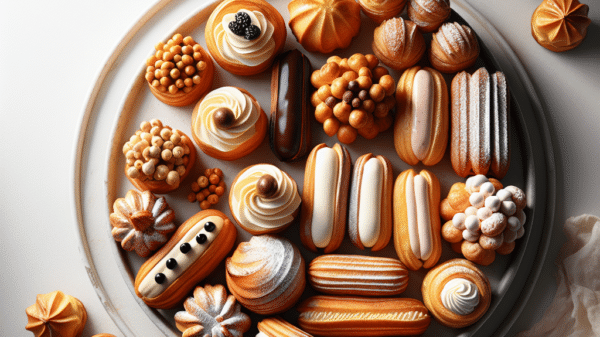
Serve your macarons on a decorative platter at parties alongside traditional French pastries or with a refreshing fruit salad. Pair them with a light dessert wine, such as a late-harvest Riesling, for an elegant touch. For a kid-friendly version, offer macarons in a rainbow of colors and flavors.
FAQs
**Q1: Can I make macarons without almond flour?**
A1: Almond flour is essential to achieve the right texture for macarons. You can experiment with other nut flours, but results may vary.
Q2: What is the best way to store macarons?
A2: Store unfilled macarons in an airtight container at room temperature for up to 3 days or in the refrigerator for up to a week.
Q3: Why did my macarons crack?
A3: Cracking often results from not letting the macarons rest long enough or from an oven temperature that is too high.
Q4: Can I freeze macarons?
A4: Yes! You can freeze unfilled macarons and filled ones separately for up to 2 months.
Q5: How do I know when my macarons are done baking?
A5: When baked, macarons should not wobble when touched and should have developed a “foot” or bottom edge.
Q6: Is there a way to achieve a shiny finish?
A6: Ensure your meringue is whipped to glossy stiff peaks, and allow macarons to rest before baking for a smoother finish.
Conclusion
Mastering French macarons is both an art and a delightful challenge. Remember to focus on technique, cleanliness, and precision for the best results. Don’t hesitate to try variations or explore other French desserts like éclairs or madeleines to expand your culinary repertoire. Happy baking, and do share your macarons with fellow enthusiasts! Your journey into the enchanting world of French pastries is just beginning, and we can’t wait to see what flavors you create.